LMS Implementation Costs and Schedule
March 2, 2020 By: Tim J. Harlan | Topics: Change Management, IT Solutions, Productivity & LaborYou’ve just been tasked by your COO with the responsibility of selecting and implementing a labor management system as part of your supply chain operation. What do you do? Where should you start? Should you use your WMS provider’s solution or look for another vendor’s solution? These questions and many more will inevitably continue throughout your journey!
Once you’ve decided to implement a labor management solution, selecting the right software provider is just the beginning. Successful deployment of the selected application depends on careful preparation of a detailed and integrated project plan coupled with a robust change management program. Each plan/program should account for all critical tasks, roles and responsibilities across your organization: IT, operations, engineering, etc. in order to meet your vendor partner’s objectives and schedule. It’s also critical for the operations team to own the project’s desired results, best practices and implementation of a continuous improvement cycle.
Key factors influencing the cost of implementation include:
- Whether you currently have a WMS.
- The LMS requirements and functional specifications.
- The number and complexity of systems to interface with.
- Whether you choose a cloud- or server-based application.
- The number of facilities in network.
- The number of associates per facility.
- The number of named users per facility.
- The number of activities under the standards program.
- The reporting requirements.
Depending on the vendor solution and options selected, implementation time will range from 3 to 12 months after contract signing. The following tables show the associated implementation costs and schedule for a traditional standards-based program compared to Easy Metrics’ multi-variable-based measurement program.
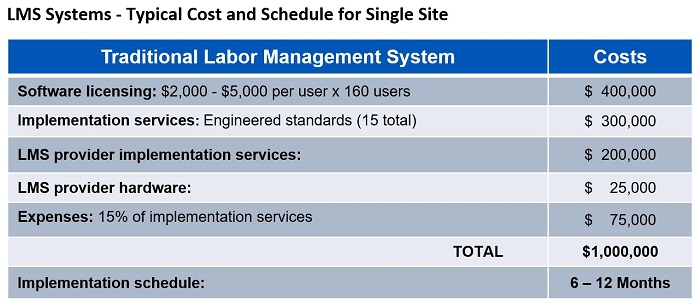
Note:
Standards maintenance is required post go-live.
Cloud-based applications are available.
Enterprise license pricing is available.
Does not include the company’s internal integration costs.
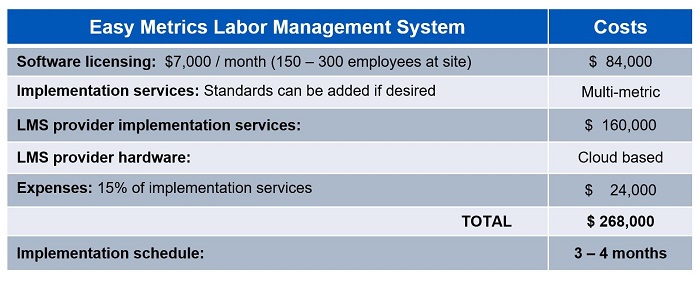
Note:
Includes systemic maintenance of multi-metrics.
Cloud-based only.
Enterprise license pricing options are available.
Does not include company’s internal integration costs.
Once the program’s standards have been created, validated and rolled out, it’s important to recognize that there will be ongoing post-go-live efforts required to maintain the quality of your program. This topic will be explored further in a future blog post on how to manage ongoing maintenance costs.
For more information, read the other posts in our labor management blog series including:
- 2020 Insight into Optimizing Labor (#1)
- The Crucial Benefits of Labor Management Systems (#2)
- Utilizing Change Management to Ensure Labor Management Success (#3)
- How to Implement an LMS in Under 120 Days (#5)
Questions about LMS? Contact Sedlak Director of Client Services Tim Harlan at tharlan@jasedlak.com.