What Healthcare Can Learn from Retail, Grocery – Interview with Healthcare Purchasing News
January 3, 2018 Topics: Media, News

Healthcare supply chain management is a constant balance of cost, quality, and outcomes. The storage and movement of medications, equipment, and supplies is a substantial link in that chain. Patrick Sedlak and Fred Crans recently offered their insights in an “Ask the Experts” article about advances and innovations in other industries, such as retail and grocery, that can benefit the healthcare system.
[From Healthcare Purchasing News]
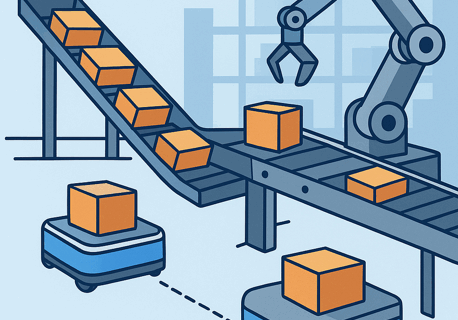
Patrick Sedlak, Principal, Sedlak Supply Chain Consultants, insisted that healthcare organizations definitely can benefit from automation and robotics.
“What we see in the new consolidated services areas are technologies that were utilized 40 years ago and, although efficient at that time, the labor and precision needed for the IDNs are far greater than in a retail or wholesale distribution center,” Sedlak said. “If you ship the wrong retail widget or short a widget, it’s simply a return or a service issue. IDNs need a much higher precision in their order fulfillment, and that’s where the automation and robotics can provide significant improvement.”
But this development remains a work in progress, Sedlak added.
“Many of the operations we see in healthcare are extremely manual,” he continued. “The IDNs took many of the processes and systems they used as stand-alone hospitals and moved them into the consolidated services centers without really stepping back and asking, ‘What is best practice?’”
Healthcare organizations just need to be prudent and perform their due diligence, according to Fred Crans, Healthcare Consultant, Sedlak Supply Chain Consultants. “There are technologies out there that healthcare knows nothing about,” Crans said. “One example is pick-to-light. If anything, they need to avoid jumping to a solution without really analyzing and understanding their own situation. Not every automated solution is right for every operation.”
From the perspective of Patrick Sedlak, Principal, Sedlak Supply Chain Consultants, the strategies and tactics used by other industries do apply to hospitals. “In any industry — healthcare or otherwise — the lack of [key performance indicators] and labor management systems lead to poorly run operations,” Sedlak said. “They don’t measure productivity, they don’t measure accuracy, they don’t plan and build for future needs, and they are not in continuous improvement. My point is that hospitals should strive to avoid the mistakes of other industries.”