Navigating the Tariff Storm Part XIII: Rethinking Your Investment Strategy – CapEx vs. OpEx
August 7, 2025 By: David K. Teeple | Topics: Supply Chain, Tariffs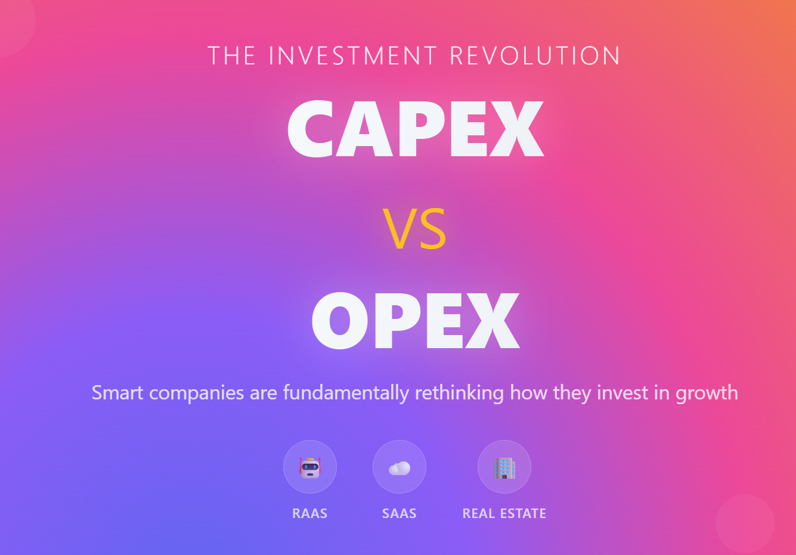
By David Teeple & Daniel Hyla
Tariffs have disrupted both short-term and long-term investment strategies across industries, with uncertainty surrounding future trade policy continuing to weigh heavily on executive decision-making. While recent trade agreements have helped reduce some of the ambiguity, the full economic impact of tariffs has yet to materialize. Until more data is available to quantify this impact, many organizations remain cautious, with capital budgets in flux and efforts shifting toward mitigation planning both upstream and downstream of operations. As a result, many companies have deferred internal investment, particularly in areas like automation, software, and facility enhancements, missing key opportunities to increase productivity, reduce manual labor reliance, and enhance system capabilities.
Historically, major facility investments, including automation and software, were capital intensive, falling under an organization’s capital expenditure (CapEx) budget. These investments typically required long planning cycles, high upfront and long-term costs associated with depreciation, and rigid ownership structures. To justify these investments, companies were often forced to lock into long-term growth and investment plans. In today’s rapidly changing environment, this rigidity presents a challenge. When conditions shift unexpectedly, organizations can be left tied to solutions that no longer align with their needs. In contrast, recent advancements in cost structuring have made it possible to shift many of these same investments to an operating expense (OpEx) model, unlocking shorter implementation timelines, greater flexibility, and reduced financial risk.
This raises a broader question that many leaders are grappling with: is it better to invest now, despite the uncertainty, or wait for clearer conditions? At first glance, it might seem more prudent to delay. However, waiting has a cost, whether it’s the erosion of competitive advantage, operational inefficiencies, or simply missed opportunities for growth. And unlike tangible costs, the price of waiting is difficult to measure and often only realized in hindsight. With many CapEx initiatives paused or deprioritized due to budget tightening, now is the time to re-evaluate them through an OpEx lens. Doing so can allow organizations to move forward on critical improvements with lower upfront investments, tax related benefits and faster payback.
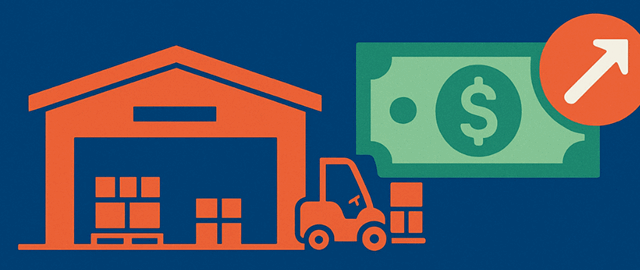
There are several key areas where this shift is already taking place. There is a new breed of investment firms offering opportunities to fund both greenfield or brownfield distribution facilities, bundling construction, automation, and infrastructure costs into a single monthly lease payment. Lease agreements are fully tax-deductible in the year that they are incurred offering immediate tax benefits. This model enables organizations to expand, relocate, or right-size their distribution networks without tapping into CapEx funds.
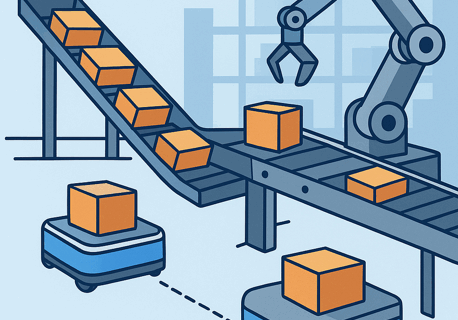
Within the four walls of the facility, automation solutions such as Automated Guided Vehicles (AGVs) and Autonomous Mobile Robots (AMRs) now offer flexible financing models. Robot-as-a-Service (RaaS) allows companies to treat automation as an operational expense, providing scalability and adaptability, particularly useful during seasonal peaks or labor shortages, without the burden of long-term ownership.
On the information systems side, Software-as-a-Service (SaaS) continues to gain traction. SaaS solutions allow organizations to implement warehouse management systems, transportation platforms, and analytics tools through subscription-based pricing models. This approach not only spreads out costs under OpEx but also accelerates implementation and keeps systems continuously updated. The result is increased transparency, better decision-making, and higher throughput, all with minimal upfront capital.
The decision to choose CapEx or OpEx, therefore, comes down to a trade-off: a company can get an immediate tax deduction from OpEx, or a consistent, long-term tax benefit from depreciating a capital asset. While there is no right answer, investments that fall under the OpEx model can offer shorter term benefits, providing an organization with increased flexibility in times of uncertainty, and unlocking improvements in efficiency, productivity, and competitiveness, without waiting for perfect conditions.
Let Sedlak assist you in addressing these challenging times. With over 65 years of experience advising industry leading organizations, Sedlak will help you prepare for an ever-evolving future. Reach out to David Teeple at dteeple@jasedlak.com or Daniel Hyla at dhyla@jasedlak.com for more information.