Sedlak Examines Retail Trends, Innovations, and Opportunities in MHI Solutions
December 28, 2017 Topics: Media, News

The growth of e-commerce, consumer price sensitivity, online “convenience” shopping, the Amazon effect, and the premise of returns are all driving fundamental changes in the retail industry. Supply chains and distribution best practices are rapidly evolving to support super flexible customer fulfillment and compete with the big dogs. Principal Patrick Sedlak and Manager Karl Sliwinski discuss innovation in robotics, the concept of pop-up distribution centers, and even the difficulty of hand-picking the perfect banana for a customer in this issue of MHI Solutions:
[Excerpts from MHI Solutions]
Online remains a heavily seasonal market – and retailers are still trying to figure out how to deliver on next-day purchases. “Especially during peak seasons, we’re seeing some of our clients and others in the industry leveraging third party logistics or 3PL providers’ capabilities to take those peak volumes and level them,” Sedlak said. “That’s prompting some 3PLs to offer short-term contracts by month or weeks to go after that peak surge.”
Online sales growth is also creating a need for changes in the distribution center, said Sliwinski. “The focus used to be the retail/wholesale (high unit) carton environment. Now the focus has shifted to ‘How do I leverage my current material handling equipment and retail capacity to process low unit orders when I need to?’ A smaller order profile for e-commerce is driving a need for more order processing/packing areas.”
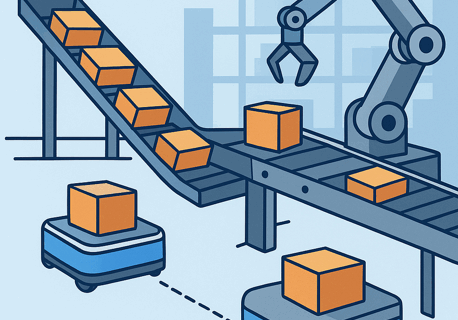
Depending on the supplier, robots can either work alongside pickers in the fulfillment center, filling order totes across multiple pick zones and ferrying completed orders to the pack stations, or they can be pickers themselves working off-shift to help meet peak demand. “Amazon has made news with its robotics-human dynamic,” Sedlak said, “but there are many companies getting into the warehouse robotics space with great success.”
Every retailers – whether part of a business strategy or not – is having to grapple with an increasing number of returns… “In the old days, you would return it to the retailer, who would reprocess it and try to get it back on the shelf if they could sell it,” Sedlak said. “Now, with e-commerce driving higher return volumes, some companies are doing predictive analytics and making decisions without ever opening the return box. Items that are deemed too expensive to reprocess for full or discounted sale may be shipped immediately to a secondary market as a way to minimize the reverse logistics costs.”